From Fashion Plate to Personal Reference: The Style Mood Board
A style mood board helps turn fashion images into adaptable prompts, so you can identify useful details without copying an outfit that belongs to someone else.
Why does a style mood board full of beautiful outfits still leave you with nothing to wear? Often, the images are being treated as instructions rather than clues. A board works better when it helps you notice what attracts you, then translate that attraction into choices suited to your own clothes, routines, and preferences.
Curated fashion images have long served as a way to gather and present visual ideas. A fashion plate offered a composed view of dress; a personal mood board can serve a less formal purpose, collecting shapes, textures, colors, and attitudes without insisting that any pictured outfit be reproduced. The useful shift is from “I need that look” to “What, exactly, am I responding to?”
When the board looks polished but says nothing
A board can be visually pleasing and still be hard to use. If it contains images chosen because they are attractive in isolation, it may have no shared idea beyond good lighting and expensive-looking coats. The problem is not that the images are wrong. It is that the selection has not yet become specific enough to guide a decision.
Look across the board and name a quality that appears in more than one place: a long, relaxed line; a sharp shoulder; a mix of rough and smooth surfaces; or a sense of ease that comes from loose layers. Avoid labels so broad they could mean anything, such as “chic” or “cool.” A useful description gives you something you can recognize in a garment or outfit.
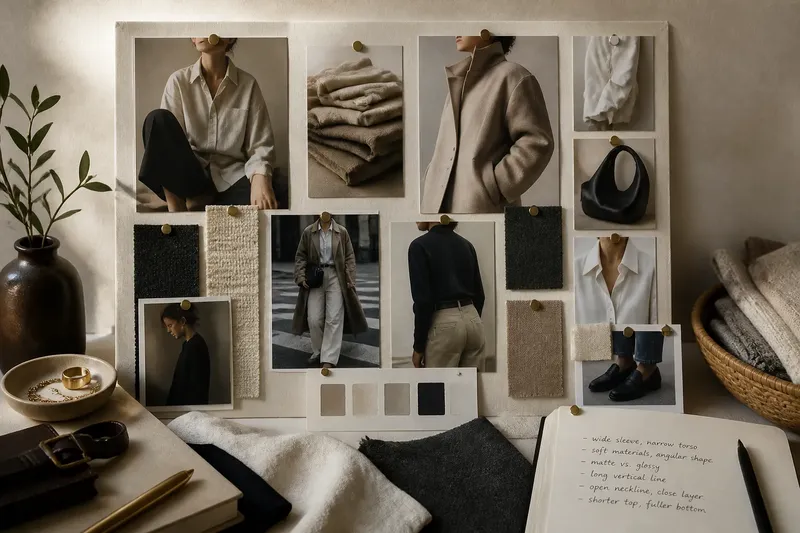
Say you have saved a street-style photograph, a still life of folded linen, and a portrait in a sculptural jacket. Imagine the common thread is not “minimalism,” but “soft materials with one clear, angular shape.” That phrase can direct attention toward a soft shirt with a structured bag or jacket, without requiring the pictured clothes, setting, or body type.
When every image becomes an outfit to copy
Copying is tempting because a complete image arrives already resolved: the clothes, proportions, styling, and mood are all in place. But the person in the picture may have different needs, tastes, or available pieces. Recreating the whole look can produce a costume-like result, especially when the appeal came from one small detail rather than the full combination.
Separate the image into parts before using it. Ask whether the prompt is a cuff turned back, a narrow belt over a loose layer, a tucked shirt with wide trousers, or the contrast between polished leather and worn denim. Borrow one element and let the rest come from your own wardrobe.
This does not mean avoiding direct references. It means deciding what you want to borrow. If the image works because of its strong proportions, try the relationship between a shorter top and a fuller lower half; if the appeal is a color, notice its placement and intensity. A reference is more flexible once it has been reduced to a choice you can make.
When the board keeps changing direction
A collection can become a record of passing interests rather than a tool for getting dressed. One week it points toward crisp tailoring; the next, toward romantic layers and vintage details. The apparent contradiction may be real, or the images may share a less obvious quality, such as movement, softness, or a preference for clothes that feel unforced.
Instead of forcing every image into one fixed aesthetic, sort them by what they offer. One group might concern silhouette, another texture, and another the mood of an outfit. A single picture can belong in more than one group. This lets a board hold several interests while making clear which kind of decision each image might inform.
When an image no longer earns its place, remove it or move it to an archive. A board does not need to prove that your taste has stayed consistent. It needs to help with the choices in front of you. Keeping every saved image can make an old impulse look like a standing instruction.
When the references belong to a different life
Fashion imagery often shows clothes in settings that are not part of ordinary routines: a dramatic staircase, an empty street, or a room where nobody appears to be carrying a tote bag. The setting can make the outfit feel more compelling while concealing whether its useful qualities transfer to your day.
Keep the attractive idea and translate its setting. A long coat may suggest a clean vertical line, not a need to dress for a cinematic walk through a quiet city. A crisp shirt may contribute neatness to an outfit that still needs to work with your usual shoes and bag. Ask what the image gives you that could survive the journey to your actual plans.
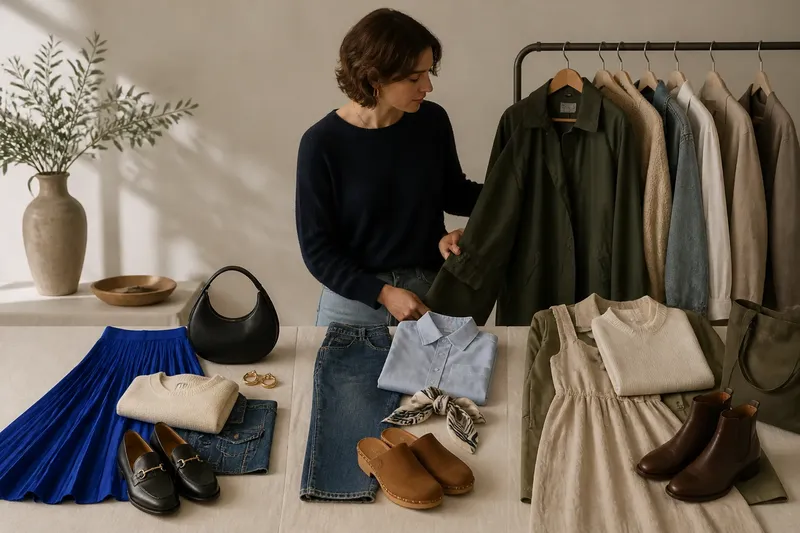
It can help to pair an aspirational reference with a familiar object or garment. A photograph of a dramatic layered outfit beside a picture of your everyday boots makes the question concrete: which part of the styling could work with footwear you already wear? The point is not to lower your ambitions. It is to give them a place to land.
When the board is all image and no usable detail
Some references are compelling as whole scenes but offer little help with clothes. A mood board does not become practical simply because it has many images. If you cannot explain what a picture is doing for you, it may be decorating the board rather than informing it.
Make a short note beside each image. Keep the note observable: “wide sleeve against a narrow torso,” “matte fabric beside glossy shoes,” or “open neckline with a close-fitting layer.” These descriptions are easier to act on than broad judgments about whether something feels fashionable or flattering.
- For a proportion reference, identify which part looks longer, shorter, wider, or closer to the body.
- For a color reference, note whether the appeal comes from a single accent, a quiet contrast, or several tones in the same family.
- For a texture reference, name the contrast, such as brushed wool beside smooth leather.
- For a mood reference, identify the visible choices that create it, such as relaxed sleeves or a precise collar.
- For a styling reference, isolate one arrangement, such as a layer left open or a hem turned up.
The note should describe the prompt, not dictate a purchase. “Find this exact jacket” closes off alternatives; “look for a firm shoulder line” leaves room for a blazer, a coat, or something already hanging in the closet.
When references answer the wrong question
A board can be useful in one area and unhelpful in another. Images chosen for color will not necessarily settle a question about fit; references for volume may say little about which shoes feel right. Confusion often comes from expecting one collection to make every styling decision at once.
Before adding an image, name the question it might answer. Are you looking for a silhouette, a way to layer, a surface contrast, or a general mood? If the answer is unclear, save the image elsewhere until you know what caught your attention. This small pause prevents the board from becoming an appealing storage drawer.
Use the board to compare options, not to pass judgment on your appearance. It can help you notice that you prefer movement over stiffness or a pronounced shape over a close fit. It cannot decide what feels comfortable or appropriate for your own circumstances. Those are choices you make while wearing the clothes, not conclusions a photograph can hand down.
How should you use a style mood board?
How many images belong on a style mood board?
There is no required number. Keep the images that offer distinct prompts, and remove ones that repeat the same idea without adding a useful variation. A smaller collection is easier to read when you are choosing what to wear.
Should a style mood board include clothes I already own?
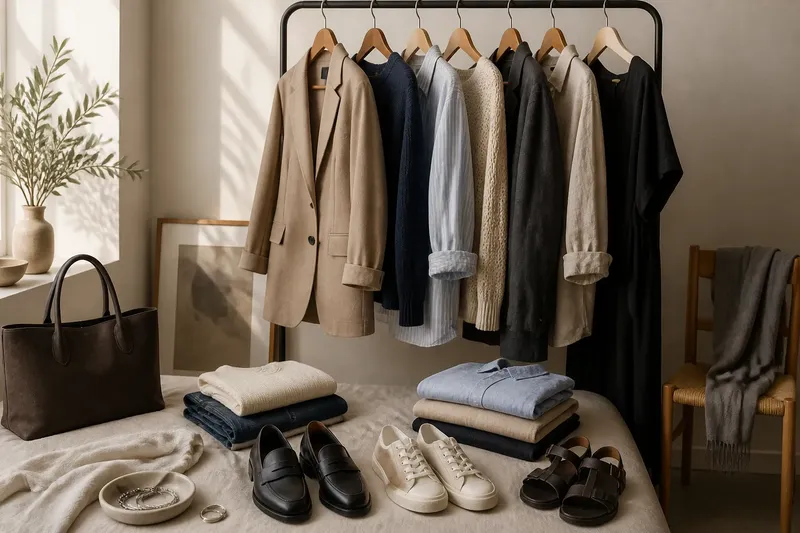
It can, especially if you want to connect visual ideas with pieces that are already part of your wardrobe. A photo of a favorite garment beside an image of a useful proportion or texture can prompt a fresh combination without turning the board into a shopping list.
Can a style mood board include conflicting aesthetics?
Yes. Put different interests in separate groups or annotate what each one contributes, such as softness, structure, or ornament. Conflicting references are only a problem if you expect them to describe one outfit at the same moment.
What should you do when an image inspires you but seems impractical?
Identify the feature you want to keep, then adapt it to clothes and routines that suit you. A dramatic silhouette might become a simpler change in proportion, while a striking surface contrast might work through accessories rather than a full outfit.
Let the reference suggest, then make the decision yourself
A useful style mood board does not prescribe a finished identity. It gathers visual evidence of what keeps catching your eye and turns those observations into prompts you can try, adjust, or decline. Its value lies in the translation: from an image to a detail, and from that detail to a choice that belongs in your own life.
When the board starts to feel authoritative, return to the image and ask what it actually shows. Keep the line, texture, placement, or mood that drew you in; leave the rest on the page. A reference earns its space by opening a possibility, not by telling you what to wear.