Three Ways to Build an Outfit Around a Favorite Garment
Build an outfit around a favorite garment by starting with a statement piece, comfortable staple, or practical layer, then choosing supporting clothes with purpose.
To build an outfit around a favorite garment, start by deciding what you want that piece to do: attract attention, make the day comfortable, or solve a practical problem. The same closet can produce very different outfits depending on whether you begin with a sculptural skirt, a soft T-shirt, or a rain jacket.
Each starting point gives you a different kind of control. A statement piece sets the visual tone; a comfortable staple sets the physical one; a practical layer sets the conditions the rest of the clothes must meet.
1. Start with a statement piece when it should lead
A statement garment has a noticeable shape, texture, print, or detail. It might be a pleated skirt, a vivid blazer, a fringed vest, or trousers with an unusually wide leg. Starting here makes sense when you want the outfit to have a clear focal point rather than a collection of equally insistent parts.
First, identify what makes the garment distinctive. If its shape is the main feature, let the rest of the outfit keep a simple outline. If its surface is busy, choose supporting pieces with quiet textures and restrained details. This is not a rule that every other item must be plain; it is a way to leave the feature you chose room to register.
Then consider proportion. A voluminous skirt may pair naturally with a close-fitting top, while a sharply tailored blazer can sit over a loose shirt and straight-leg trousers. The aim is not to cancel the statement piece out, but to give its shape enough contrast to remain legible.
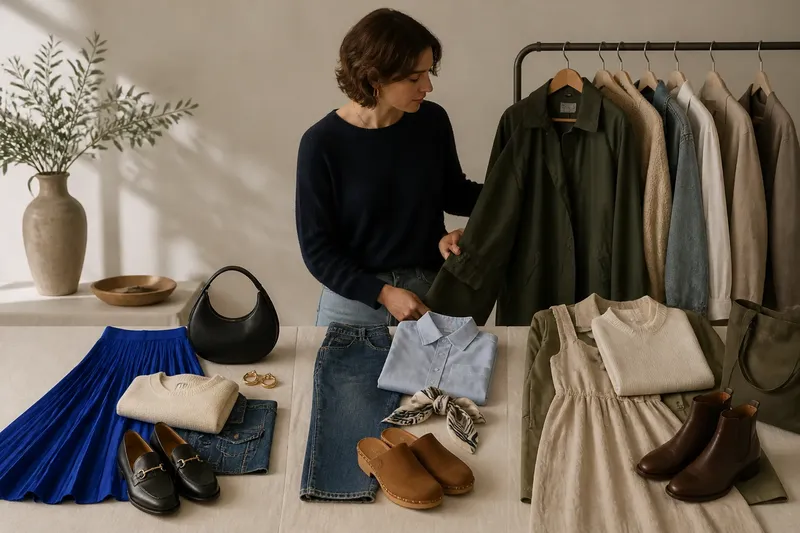
Say you have a cobalt-blue pleated skirt that you reach for but rarely wear. You could pair it with a cream knit top, a cropped denim jacket, and simple loafers; the expected result is an outfit where the skirt remains the main visual event, while the familiar materials make it easier to wear in an ordinary setting.
Keep accessories in the same conversation. A sculptural earring can echo a garment’s angular shape; a soft leather bag can temper a crisp jacket. When several accessories repeat the garment’s most noticeable feature at once, the outfit can begin to sound like it is making the same point twice.
This approach is useful when the garment already carries an idea you like: theatrical, romantic, sporty, or sharply tailored. You are not required to make every item match that idea. One or two supporting choices can make the focal piece feel intentional without turning the whole outfit into a costume.
2. Start with a comfortable staple when the day should feel easy
A comfortable staple is not necessarily plain or anonymous. It could be a broken-in pair of jeans, a cotton button-down, a jersey dress, or a cardigan that feels right against your skin. Begin with it when comfort is the first condition and you want the rest of the outfit to develop around something you already trust.
Ask what makes the staple comfortable in practice. Maybe the fabric breathes, the waist does not distract you, or the shoulder line leaves room to move. Preserve those qualities as you add pieces. A restrictive jacket over a soft dress may make a coherent photograph, but it is less useful if you spend the day pulling at the sleeves.
Next, give the staple a little direction. A cotton button-down can look crisp with pressed trousers, relaxed with denim, or slightly offbeat under a slip dress. Shoes and outerwear often help decide which reading the outfit takes, so choose them according to the day’s actual needs rather than a vague wish to “dress it up.”
Imagine your favorite straight-leg jeans feel good but make your usual outfits seem predictable. Add a silk scarf tied at the neck, a short-sleeved knit, and suede clogs; the expected result is still a familiar, comfortable outfit, but the changed textures and accessories give it a more deliberate point of view.
Comfort can also guide how much structure to add. A soft T-shirt beneath an unlined blazer introduces polish without replacing the easy base; a crisp shirt tucked into relaxed trousers adds definition while leaving the outfit loose. Think in terms of one adjustment at a time, then check whether you still want to move, sit, and carry what the day requires.
Starting with a staple works particularly well when you have limited time or want to wear something repeatedly without making each outfit identical. Change the surrounding pieces, not the reason you liked the staple in the first place. A reliable item earns its place through use, not through an obligation to appear novel every time.
3. Start with a practical layer when conditions set the terms
A practical layer is chosen because the day calls for it: a raincoat, warm overshirt, cardigan, or wind-resistant shell. Beginning with that piece makes the outfit respond to weather, temperature changes, or the need to carry useful items. It also prevents the familiar mistake of assembling a pleasing outfit and then discovering it cannot handle the walk to the train.
Consider the layer’s job before choosing what goes beneath it. A raincoat needs room for the clothes underneath and should work with shoes that can tolerate damp pavement. A thick cardigan may add warmth but also bulk beneath a fitted coat. These are questions of use and fit, not a demand that every layer be technically perfect.
Then decide whether the layer should disappear into the outfit or remain visible as a defining piece. A neutral overshirt can act as a frame for a patterned dress. A bright shell can become the outfit’s focal point, with simple trousers and a sturdy knit keeping the combination grounded. Either choice is useful; the distinction is whether you want the layer to support or lead.
Imagine the forecast calls for intermittent rain and you want to wear a loose linen dress. A roomy olive raincoat, a lightweight cotton layer beneath the dress, and leather ankle boots could give you a practical outfit without forcing you to abandon the dress; the observable aim is a combination that still feels like your choice once the coat comes off indoors.
Pay attention to what happens when the layer is removed. If the base outfit feels incomplete, that may be fine for a short errand, but less satisfying if you will spend much of the day indoors. If the layer has pockets, a hood, or a drawstring, consider whether those details affect the silhouette when it is worn open or closed.
Starting with a practical layer is especially helpful when your plans involve moving between indoor and outdoor spaces. Build the base outfit so it works on its own, then let the outer piece address the conditions. The layer can shape the look, but it need not dictate every other choice.
Which starting point fits the outfit you want?
How do I choose which garment to start with?
Start with the item that has the strongest claim on the day: the piece you most want to wear, the one that feels best, or the one that addresses the conditions. If two garments make competing demands, choose the one that matters more and let the other play a supporting role.
Can a comfortable staple also be a statement piece?
Yes. A favorite pair of vivid trousers or a sharply cut T-shirt can be both easy to wear and visually distinctive. Decide whether comfort or visual impact is leading the outfit, then make the remaining choices support that priority.
What if the practical layer overwhelms the outfit?
Try simplifying the base outfit’s shapes and details, or wear the layer open when conditions allow. If the coat or overshirt must stay on, treat its color, texture, and silhouette as part of the outfit rather than an interruption to it.
How can I tell when the outfit is finished?
Check that the focal point is clear, the clothes allow the movement you need, and the outfit suits the day’s conditions. If one item is uncomfortable or another feels visually unnecessary, adjust that part rather than rebuilding everything.
Let the first garment set one useful priority
To build an outfit around a favorite garment, you do not need a complicated formula. Let a statement piece set the visual direction, a comfortable staple set the physical terms, or a practical layer answer the conditions; then make supporting choices that respect that starting point. The outfit will feel more considered when its parts have different jobs and the garment you chose still has a reason to be there.