The Myth That a Personal Style Must Stay Consistent
Personal style does not have to stay consistent every day. Learn to spot useful recurring preferences without turning them into rules that limit you.
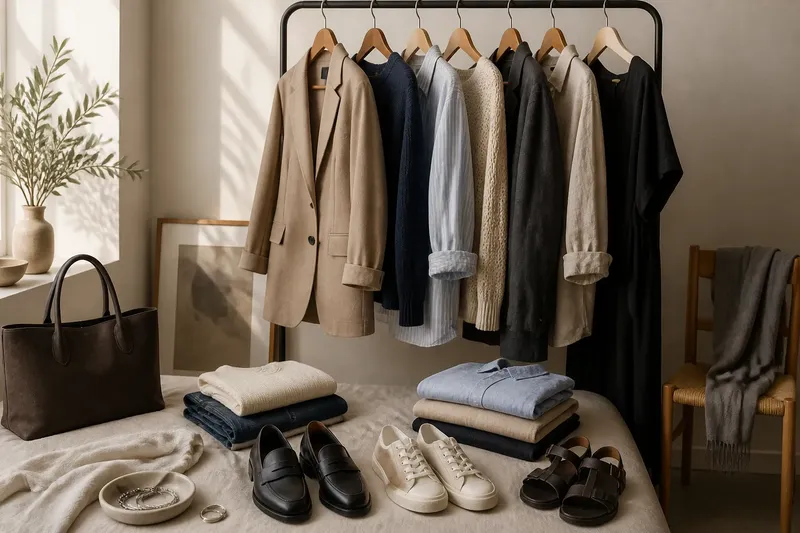
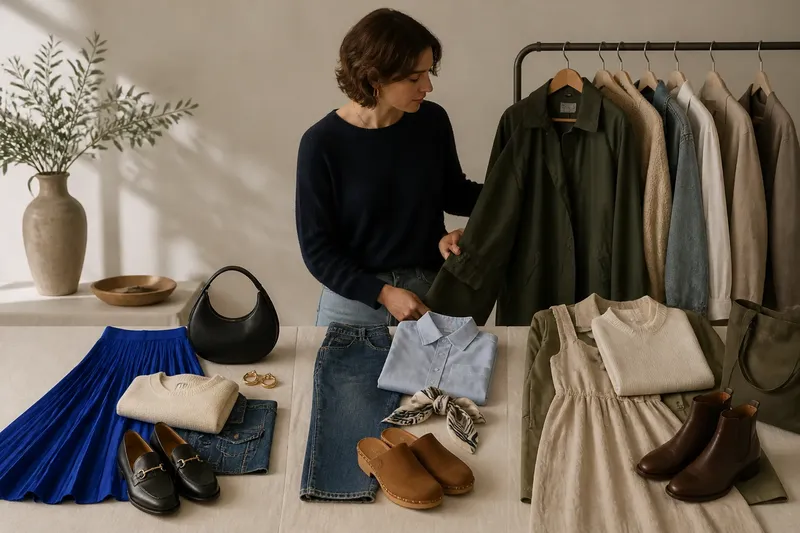
Does personal style have to stay consistent for people to recognize it? No. Personal style can include a sharp blazer one day and a loose knit the next; what holds it together is often a way of choosing, not a uniform of repeated items.
The pressure to look consistent can turn a helpful sense of taste into a dress code you wrote for yourself and then forgot you were allowed to revise. A more useful aim is to notice recurring preferences while leaving room for mood, setting, comfort, and curiosity. Recognition comes from patterns, but patterns do not need to dictate every outfit.
Consistency is not the same as sameness
When people describe a style as recognizable, they may mean that certain choices recur: relaxed shapes, polished shoes, tactile fabrics, or a preference for clothes that leave room to move. Those choices can appear in different combinations. A person who likes a clean silhouette might wear wide-leg trousers with a fitted shirt one day and a straight dress with a long coat another.
That distinction matters because identical outfits are easy to identify but not necessary for a coherent wardrobe. Repeating the same jacket, palette, or silhouette can be satisfying; it is simply one option among many. A recognizable style may instead come from how you balance volume, how formal you like to feel, or which details you tend to notice first.
Recurring preferences are clues, not instructions
A preference becomes useful when it helps you make decisions. You may repeatedly reach for crisp cotton, narrow stripes, silver jewelry, or shoes with a substantial sole. Those habits can serve as clues about what feels right, without becoming rules that every outfit must obey.
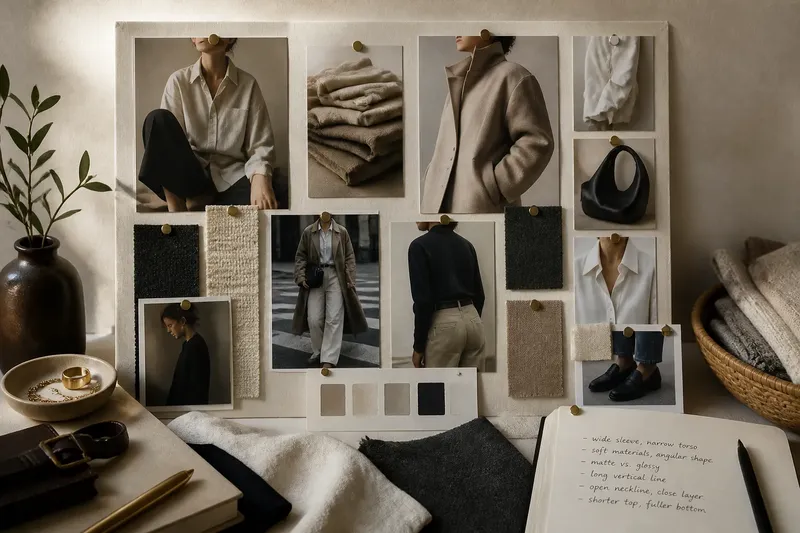
It helps to separate the preference from its most familiar expression. If you like structure, a tailored coat is one expression; a boxy shirt or a firm canvas bag may offer another. If you like softness, it might come through in brushed wool, rounded shapes, or a loose drape rather than the same pale sweater on repeat.
Try describing preferences in plain language rather than turning them into a shopping formula. “I like clothes that feel composed but not precious” leaves room for interpretation. “I only wear navy, straight-leg trousers, and loafers” leaves considerably less.
Rules can make a wardrobe smaller than it is
Rigid style rules often begin as reasonable observations. A certain cut may flatter you, a familiar outfit may work for a busy morning, or a particular level of formality may feel comfortable. The trouble starts when an observation becomes a prohibition: “I look good in tailored clothes” quietly turns into “I cannot wear anything soft or loose.”
That shift can make getting dressed feel like checking compliance. It also hides useful information. A new shape might reveal that you enjoy more movement than your usual outfits allow, or that a detail you once dismissed feels right in a different fabric. No outfit has to become a permanent signature to earn a place in your closet.
Say you usually choose neat, structured clothes but are curious about a roomy linen shirt. Imagine wearing it with trousers you already like and simple leather sandals. If the outfit feels comfortable but too casual, you might keep the shirt and change the shoes; if the looseness itself feels wrong, you have learned something more specific than “I should never wear relaxed clothes.”
What helps a style feel recognizable?
Recognition can come from several recurring tendencies at once, rather than one defining item. Some are visible; others are about the feeling you seek from clothes.
- Shape: You may favor long lines, rounded shoulders, generous volume, or close-fitting layers.
- Texture: Denim, crisp poplin, soft knits, suede, or matte cotton may appeal more than a particular color.
- Formality: You might routinely soften dressy clothes or sharpen casual ones.
- Detail: A preference for simple hardware, visible stitching, unusual collars, or understated jewelry can recur across very different outfits.
- Comfort: You may want clothes that feel easy to move in, offer a sense of coverage, or have a little structure.
These are lenses, not categories to collect. You do not need to identify all of them, or make each one visible at once. One recurring preference may be enough to make a new combination feel like yours.
How can personal style change without losing its thread?
How do I know whether a preference is genuinely mine?
Notice what you choose when no one is asking you to dress for a particular impression. Pay attention to comfort, movement, and the details you keep returning to, rather than treating a compliment or a trend as decisive evidence.
Do I need a signature item?
No. A signature can be an approach, such as favoring relaxed tailoring or mixing smooth and rough textures, rather than a single garment. If an item stops feeling useful, your style does not have to retire with it.
What if my taste changes from week to week?
That variation may reflect different needs, moods, or interests rather than a failure to have a style. Look for preferences that recur over time, but let a short-lived curiosity remain a curiosity if that is all it turns out to be.
How can I try a different look without replacing my wardrobe?
Borrow, swap, or rework one piece you already own before shopping for a whole new direction. A different shoe, belt, or layer can shift the impression while leaving familiar clothes in use.
Let the pattern stay open
A personal style is easier to live with when it describes your choices without policing them. Think of recurring preferences as a vocabulary: you can use familiar words often, learn new ones, and still sound like yourself. The phrase “personal style does not have to stay consistent” is useful not as permission to dress without thought, but as a reminder that thoughtfulness does not require repetition.
When an outfit feels unfamiliar, ask what is unfamiliar about it. It may be the proportion, the formality, or simply a combination you have not tried before. That question gives you a practical next move: adjust one element, wear the outfit as it is, or leave it aside. The decision belongs to the person getting dressed, not to an imaginary audience keeping score.